
Evidence-Based Therapy Since 1993
Building a Life Worth Living
Dialectical Behaviour Therapy is a transformative treatment developed by Dr. Marsha Linehan, helping people manage emotions, improve relationships, and develop skills for a fulfilling life.
30+ Years
Evidence Based
Global Support
Community
Understanding DBT
What is Dialectical Behaviour Therapy?
DBT is the most thoroughly researched therapy for people with self-harm and suicidal behaviours, developed by Dr. Marsha Linehan at the University of Washington.
Research-Proven Benefits
- Reduces frequency of self-harm behaviours
- Lowers inpatient admission rates
- Improves global functioning and adjustment
- Helps manage intense emotions effectively
- Builds lasting relationship skills
- Provides structured, skills-based approach
A Structured, Skills-Based Approach
DBT is very helpful for people who struggle with their emotions, or those who have experienced an environment that is critical or invalidating. It’s also beneficial for those experiencing impulsivity, significant distress, or difficulty maintaining relationships and life situations.
The treatment focuses on strategies that clients have found actually work for them, providing clinicians with effective tools to help their clients build meaningful change.
Conditions DBT Can Help
Clinical depression & anxiety
ADHD and ASD
Self-harm and suicidal behaviours
Binge eating disorders
Post-traumatic stress disorder
Substance use problems
Borderline Personality Disorder
If you prefer another format, here is a more visual video explaining DBT, by Esme Shaller, Clinical Psychologist.
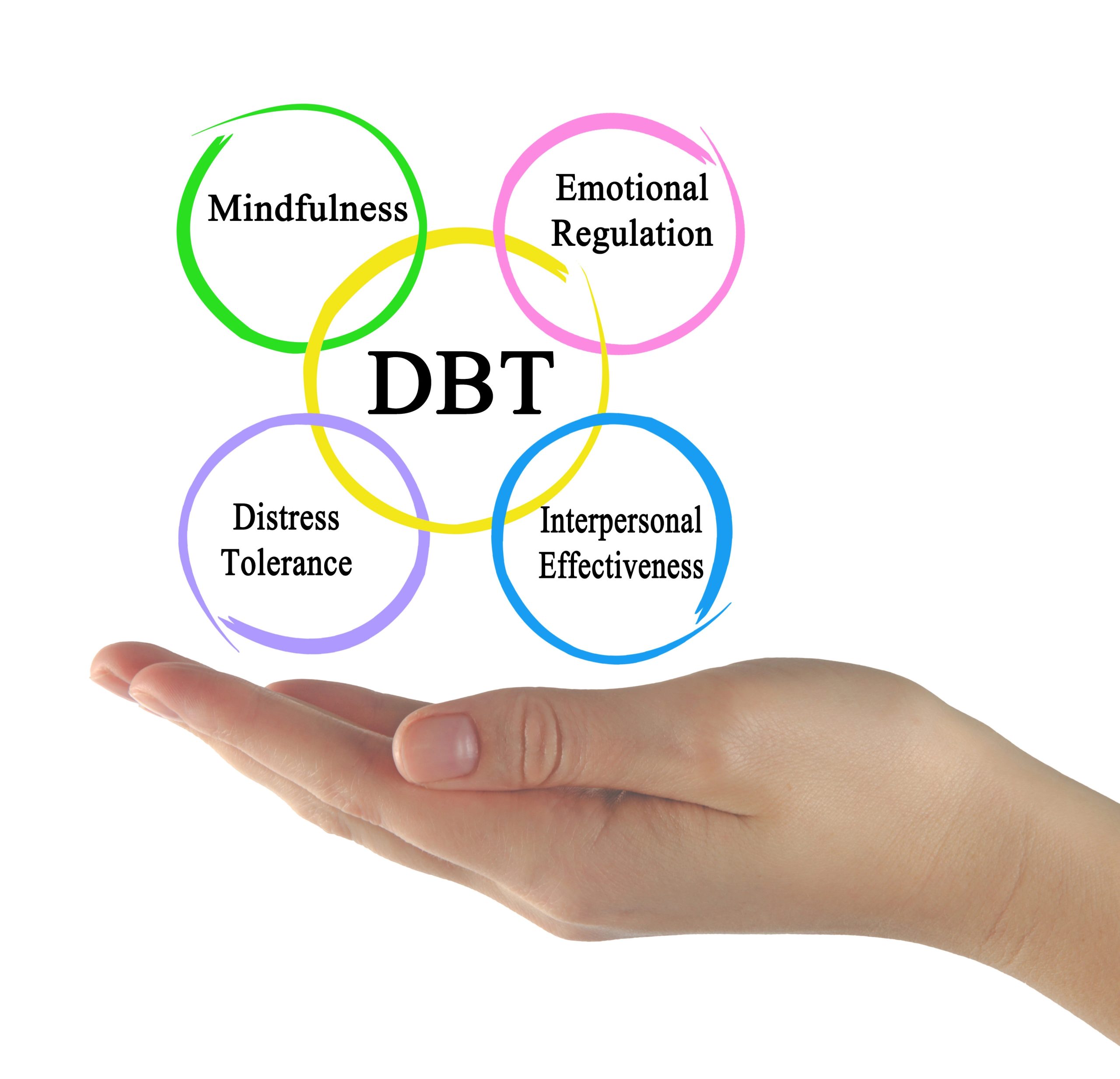
The Four Pillars
DBT Skills Modules
Core Mindfulness
Foundation Skills
Key Benefits
- Strategies to deal with dissociation
- Understanding origins of psychological distress
- Managing intense experiences like urges and intrusive memories
- Anxiety management techniques
- Learning to hold attention on one point of focus
Interpersonal Effectiveness
Relationship Skills
Key Benefits
- Effective communication strategies
- Getting what you want in interactions
- Essential skills for depression and anxiety
- Balancing passivity and aggression
- Maintaining self-respect and autonomy
- Being True to yourself in relationships
Emotion Regulation
Managing Feelings
Key Benefits
- Understanding and settling emotions
- Building emotional resilience
- Growing protective emotional boundaries
- Changing emotions when desired
- Enhancing positive emotions
Distress Tolerance
Crisis Survival
Key Benefits
- Tolerating distress of the moment
- Making peace with past events
- Advanced mindfulness concepts
- Avoiding behaviors that worsen situations
- Radical acceptance techniques
Specialised Care
Specialised DBT Programs

DBT for Teens
Adapted DBT program where teens attend with a family member. includes additional special ‘Walking the Middle Path’ module designed specifically for adolescent-family dynamics.
- Multi-Family Skills Training Groups
- Walking the Middle Path module
- Teen and parent participate together
- Evidence-based adolescent adaptation

DBT for Eating Problems
- Weekly 1-hour individual therapy
- 2-hour weekly skills group
- Focus on emotional eating triggers
- Not suitable for anorexia nervosa

DBT Graduates Program
For those who have completed a DBT program and want to maintain and extend their skills. Designed by graduates themselves to meet their identified needs.
- Skills review and practice
- Problem solving support
- Mindfulness practice
- 1.5-hour group sessions
What Participants Say
The treatment really does work!
Weekly DBT Structure
Group Skills Session
2.5 hours
Individual Therapy
1 hour
Phone Coaching
As needed
Total Weekly
3.5+ hours
Your Journey
The Four Stages of DBT
Stage 0: Pre-Commitment
1 session – 12 months